Homeschool Room Hacks: Creative DIY Solutions for Learning Spaces

Creating the perfect homeschool room is like building your dream classroom, except with a little more personality and a lot more flexibility. Whether you’ve got an entire room dedicated to learning or just a corner in the living room, with a few creative DIY hacks, you can transform any space into an inspiring and functional learning environment for your kids. Let’s dive into some clever ways to make homeschooling more organised, engaging, and fun!
1. The Magic of Multi-Use Furniture
When space is at a premium, versatility is key! Invest in multi-purpose furniture that can serve more than one function. Think folding tables that transform into craft stations or a desk that doubles as storage. One clever hack is using an old dresser and turning it into a desk. Add a piece of plywood on top, and voilà – a sturdy desk with hidden drawers for supplies. It’s a budget-friendly way to create more room for learning materials.
2. DIY Learning Stations
If your kids have different learning styles, why not create mini learning stations for each subject? A reading nook with comfy cushions, a science corner with easy-to-reach supplies, and a maths area with a chalkboard wall or dry-erase board. The beauty of this hack is that you can easily rotate stations as your child’s interests change, keeping things fresh and engaging. Plus, dividing up the space into themed areas makes it easier to stay organised and prevents any subject from feeling too overwhelming.
3. Get Creative with Wall Storage
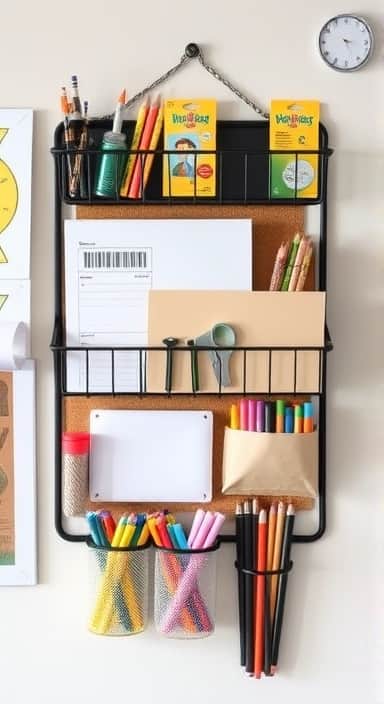
Don’t overlook your walls – they’re prime real estate for homeschooling storage! Floating shelves or wall-mounted baskets are perfect for holding books, folders, and supplies without taking up any precious floor space. You can also create a DIY wall organiser using a hanging shoe rack to store everything from pens and pencils to flashcards and craft materials. A corkboard or magnetic board can be used to display artwork, inspirational quotes, or a family calendar to keep track of assignments and important dates.
4. Repurpose, Reuse, and Recycle
Turn everyday items into useful learning tools with a little bit of creativity. Old jars can become pencil holders, spice racks can organise flashcards, and wine crates make great storage bins for books or art supplies. Not only does this save you money, but it’s also a sustainable way to decorate your homeschool room. And let’s face it, kids love seeing everyday objects turned into something magical!
5. The Power of Labels
A homeschool room can quickly become a jumble of materials, so labelling everything is a must! Use clear containers or small baskets and label them with colourful tags or stickers to help your kids know exactly where to put things away. You can even add fun illustrations to the labels, so younger children can easily identify where each item belongs. This doesn’t just help keep things organised; it encourages kids to take responsibility for their own space, too.

6. Repurposing Furniture for More Learning Tools
You can easily upgrade everyday furniture into handy homeschool tools. For example, transform an old coffee table into a mini art station by adding a few cups for crayons, paints, and brushes. Or, turn a small filing cabinet into a “student workstation” complete with their own folder, notebooks, and a weekly planner. These small adjustments don’t just help with organisation; they also create a sense of ownership and independence in your child’s learning.
7. Incorporate Fun Learning Materials
The best homeschool rooms are the ones that spark curiosity. You can integrate educational tools like a large world map on the wall, a globe, or even a plant to teach kids about nature. Having easy access to these materials can make learning feel less like a chore and more like an adventure. For example, a DIY math wall using colourful number posters or a time-telling chart can turn any wall into a mini classroom. Add a few inspiring quotes or motivational posters, and your homeschool room will be a place that both you and your children love to spend time in.
8. Keep the Crafty Spirit Alive
Homeschooling isn’t just about textbooks; it’s about creativity, too. Set up a DIY craft station stocked with supplies like scissors, glue, paper, and markers. You can even hang a curtain rod on the wall to store rolls of paper for endless art projects or use an old shoe organiser to keep paints and crayons neatly separated. Get the kids involved by letting them create their own organisation systems, making it a fun and educational activity that doubles as a lesson in tidiness!
9. Light Up the Room with Natural Light
The right lighting can make all the difference in a homeschool room. If possible, set up near a window to take advantage of natural light, which helps with focus and mood. If you’re stuck in a windowless space, invest in warm-toned lamps or LED strip lights. A well-lit room promotes a positive learning environment, and it’s much easier on the eyes for long study sessions.
10. Add a Touch of Personalisation
Your kids spend a lot of time in their learning space, so make it a reflection of their personality! Allow them to decorate their own study area with photos, artwork, or even their favourite quotes. Adding personal touches not only makes the space feel more welcoming, but it also fosters a sense of pride and ownership in their learning environment. You’ll be amazed at how much more excited they are to get to work when they’ve had a hand in creating the space!
A homeschool room is more than just a place to study – it’s a space for creativity, growth, and discovery. With these DIY hacks, you can create an environment that’s both functional and fun. The key is to think outside the box (literally!) and design a room that works for your family’s needs. By using a few clever tricks and a little imagination, you’ll have a homeschool space that inspires learning every day. Happy crafting and learning!